
 USA
 Canada
 Brazil
 Germany
 France
 Italy
 Switzerland
 Sweden
 Spain
 Great Britain
 Norway
 Russia
 South Africa
 Japan
 Australia

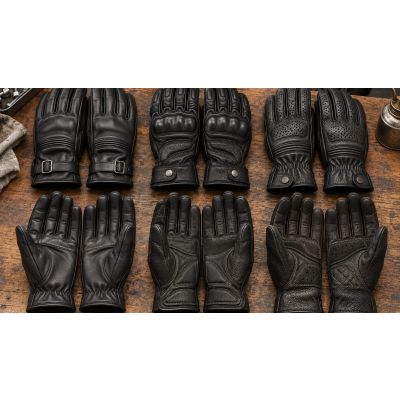
Short answer: cowhide is the thicker, tougher all-rounder that suits cold weather, touring and heavy use. Goatskin is thinner and more supple, with good abrasion resistance for its weight, and it is common on street and sport gloves. Kangaroo is the lightest and is often described as the strongest for its thickness, but it costs more. Pick the leather by how and where you ride, then check the construction, because seams and palm layers matter as much as the hide.
Quick comparison
These are relative comparisons, not test results. Thickness, tanning and construction change them, and none of these leathers guarantees protection.
| Feature | Cowhide | Goatskin | Kangaroo |
|---|---|---|---|
| Feel | Firm, substantial | Supple, flexible | Very thin, close to the hand |
| Abrasion resistance | Good, mostly from thickness | Good for its weight | Often described as high for its thickness |
| Weight | Heaviest | Light to medium | Lightest |
| Break-in | Longest | Short | Short |
| Warmth | Warmest | Moderate | Lighter, more breathable |
| Price | Usually lowest | Mid | Highest |
| Typical use | Touring, cold weather, heavy use | Street, sport, commuting | Track, racing, feel at the lever |
Cowhide gloves
Cowhide is thick and stiff, so it protects through sheer mass and takes a while to loosen. A new pair can feel like a board for the first rides, then shape itself to the hand. It is warm, which helps in autumn and winter riding and in touring, and it tolerates wear well, so it is a sensible choice for riders who put in long miles in all weather. The trade-offs are weight, less feel at the controls and a slower break-in. Our general guide to cowhide vs sheepskin vs kangaroo compares the three leathers beyond gloves.
Goatskin gloves
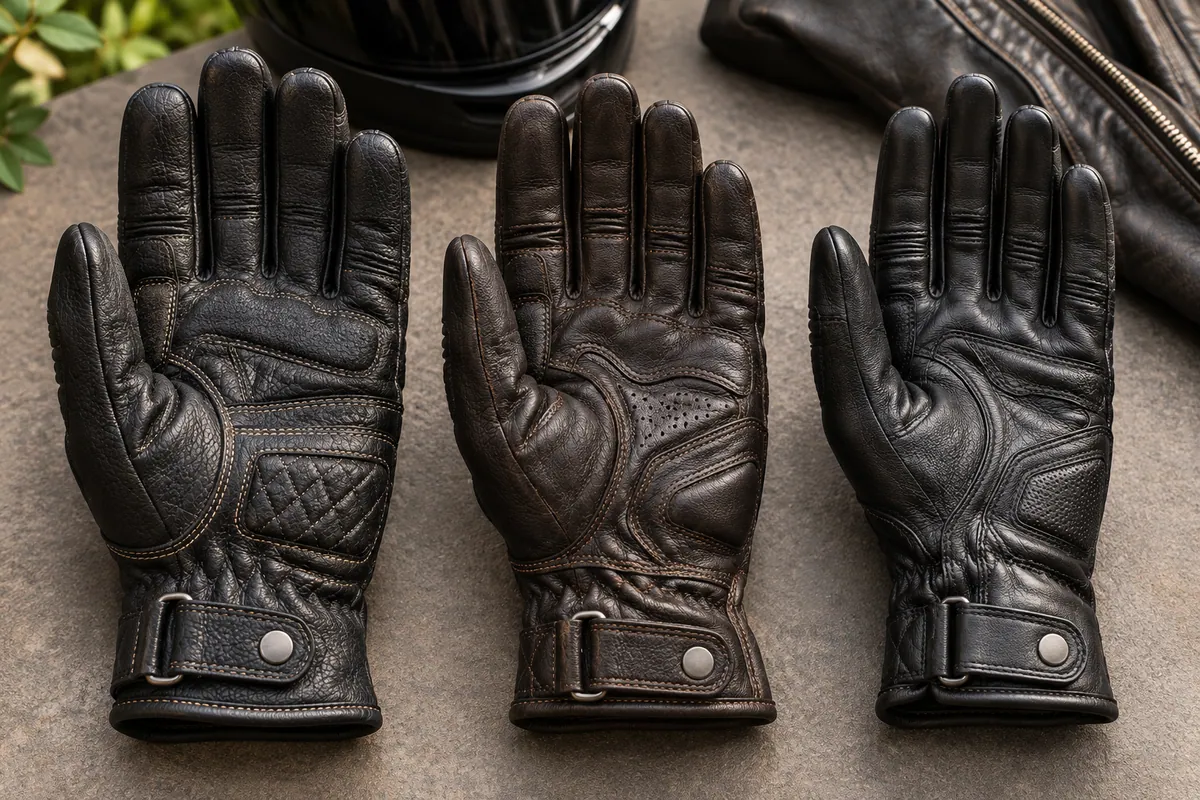
Goatskin has a natural oiliness and a tight grain, which makes a thin, flexible glove that still wears well. It is lighter than cowhide, easier to feel the levers through and comfortable sooner, and it is common on street and sport gloves. Sweat and repeated wetting can stiffen any leather, so goatskin should be dried slowly and conditioned lightly. It is less warm than cowhide, so winter riders often add liners or choose a different glove.
Kangaroo gloves
Kangaroo leather is thin and fine-fibered, and it is widely used in racing gloves because it gives feel at the lever with a good strength-to-weight ratio. It costs more, and it has a regulatory side: rules on kangaroo products differ by place, so check before ordering. Our article on whether kangaroo leather is legal explains where to check, and the existing comparison of cowhide vs kangaroo covers race-suit use. If you are looking at gloves with a kangaroo palm, see the product page for the leathers offered on each glove.
Thickness is not the whole story
A thick glove with a weak seam can fail sooner than a thinner glove with a well-placed one. In a crash, what matters is the whole construction.
- Palm layer. A double-layer palm or a replaceable slider adds material where hands hit the ground first.
- Stitching and seam placement. Seams on the outside of the glove, away from the palm and the sides of the fingers, are less likely to touch the road.
- Knuckle and finger protection. Hard or padded protection adds impact resistance.
- Fit. A glove that is too large can roll off, and one that is too small stresses the seams.
Standards help here. EN 13594 is the European standard for motorcycle riders' gloves, and our post on EN 13594 gloves and EN 13634 boots explains what the markings mean. Published gear-rating programs run by motorcycle safety organizations also test abrasion in a consistent way, and they are worth consulting. A glove from any leather that meets a recognized standard and fits properly is better than one that simply feels tough.
Common mistakes when choosing glove leather
- Buying on hide alone. Two gloves in the same leather can protect very differently if one has a reinforced palm and better seams.
- Going too thin for the weather. A thin racing glove is a poor fit for a cold commute, where cold hands slow your reactions.
- Going too big. Some riders buy a size up to avoid break-in, but loose gloves wrinkle under the fingers and can slide off in a slide.
- Ignoring the cuff. A gauntlet cuff that overlaps the jacket sleeve stays closed in a fall; a short cuff may leave a gap at the wrist.
- Treating the leather name as a safety rating. A leather type describes a material. A standard or a test result describes performance.
Sweat, care and break-in
- Dry them slowly. Air dry away from heat, because radiators and hair dryers stiffen and shrink leather.
- Stuff them. Paper or a glove dryer helps them keep their shape.
- Condition lightly. A small amount of conditioner suited to the leather keeps it supple. See our guide to cleaning and conditioning leather for the method, though glove makers may have their own instructions.
- Break them in gradually. Short rides first, and shaping them by gripping the bars helps.
How to choose: by rider scenario
| You ride | Leans toward | Why |
|---|---|---|
| Daily commuting in mixed weather | Goatskin or light cowhide | Comfort and protection with reasonable weather handling |
| Long-distance touring | Cowhide | Warmth and durability over many miles |
| Track days and racing | Kangaroo or goatskin with a reinforced palm | Feel at the controls and light weight |
| Cold weather | Cowhide, lined | Thicker, warmer leather and liners |
| Hot weather | Perforated goatskin or kangaroo | Lighter, better ventilated |
Our guides to choosing racing gloves for track riding and the motorcycle gloves buying guide go further on cuff length, palm features and knuckle protection.
Getting the right glove size
Hands vary more than glove sizes allow for. The measurements that matter are finger length, palm width and hand circumference, and a glove that matches them is more comfortable and more secure. Sizing options differ by glove, and some styles come in standard sizes only, so check each product page or ask customer service if you fall between two sizes. Browse our custom motorcycle gloves, or for non-riding use see custom leather gloves.
FAQs
Is goatskin better than cowhide for motorcycle gloves?
Neither is better overall. Goatskin is lighter and more flexible, and wears well for its weight. Cowhide is thicker and warmer. Choose by your riding.
Is kangaroo leather good for gloves?
Yes, it is thin, light and often described as strong for its thickness, which is why it is used in racing gloves. It costs more and has regional rules, so check where you can buy it.
Which leather is most abrasion resistant?
It depends on thickness and construction. Per unit of thickness, kangaroo is often rated highly, but a thick cowhide glove can also resist abrasion well. Look for independent test results or a recognized standard.
How long do leather motorcycle gloves take to break in?
Cowhide takes longest, often several rides or more, while goatskin and kangaroo are comfortable sooner. There is no fixed number.
Are goatskin gloves warm enough for winter?
Not on their own for most riders. Winter use generally calls for thicker leather, liners or both.
What is the best leather for racing gloves?
Many racing gloves use kangaroo or goatskin for feel and light weight, with reinforced palms. The best choice also depends on the standard, the fit and the rider.
Browse our custom motorcycle gloves and check each page for its sizing options.