
 USA
USA  Canada
  Brazil
  Germany
  France
  Italy
Italy  Switzerland
  Sweden
  Spain
Spain  Great Britain
  Norway
  Russia
  South Africa
  Japan
Japan  Australia
When you're shopping for motorcycle leather gear protection, the choices can feel overwhelming. Every brand claims their jackets, suits, and gloves are safe. But what actually separates protective gear from casual apparel? What should you look for to know if the leather gear you're considering will really help reduce injury risk during a crash or slide?
This guide walks you through the real safety features that matter. You'll learn how to read certification labels, understand what different ratings mean, and identify gear designed around actual rider protection. Whether you're buying your first leather jacket or upgrading to a custom racing suit, these insights will help you make a more informed decision.
Quick Answer
Real protective motorcycle leather gear is built with tested abrasion resistance, reinforced impact armor, proper fit, and reinforced stitching. Look for CE certification under EN 17092 for the garment itself and EN 1621 for armor. Check the product label for the class rating (AAA, AA, A, B, or C), armor coverage, armor levels, and manufacturer details. Proper fit matters as much as materials—armor must stay in place during a slide. Test the flexibility and comfort before buying to ensure you'll actually wear it.
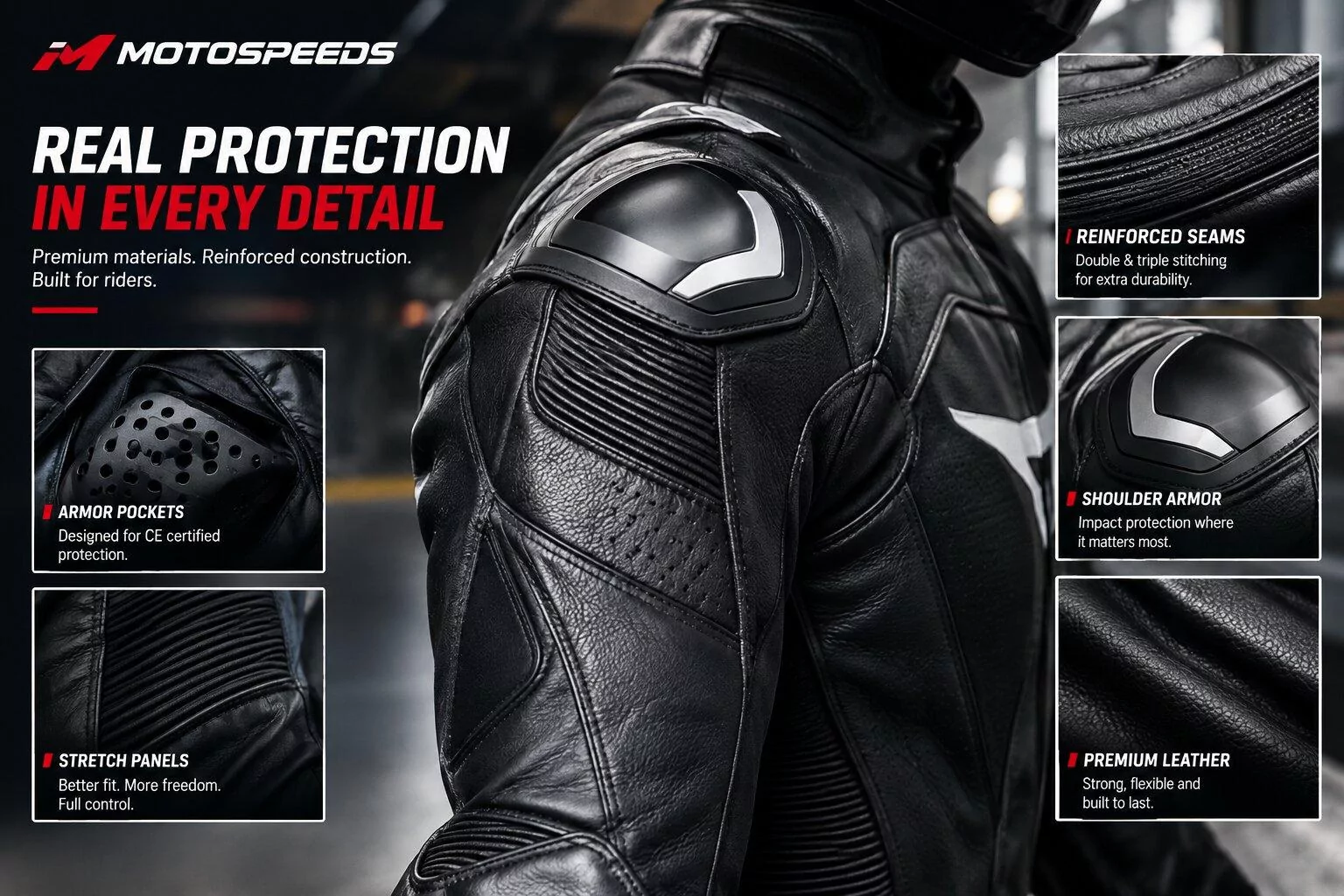
Table of Contents
- What Defines Protective Motorcycle Leather Gear
- Why Abrasion Resistance Matters More Than You Think
- How Armor and Impact Protection Work Together
- Why Fit and Armor Positioning Are Critical for Safety
- How to Read Certification Labels and Safety Ratings
- Common Mistakes Riders Make When Choosing Protective Gear
- When and Why Riders Should Upgrade Their Gear
- Making Your Next Protective Gear Purchase
What Defines Protective Motorcycle Leather Gear
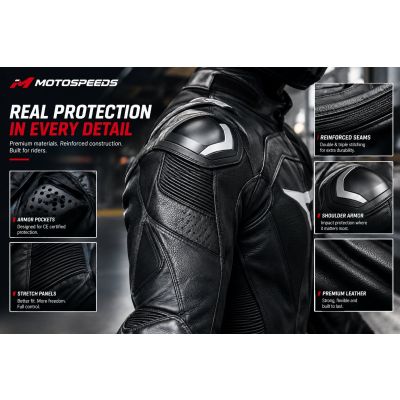
Protective motorcycle leather gear is engineered to reduce injury risk during crashes and slides. It's not just leather—it's leather combined with tested armor, reinforced seams, impact zones, and construction designed around where riders typically contact the road.
A protective suit, jacket, or pair of gloves has several core features working together. The leather itself must resist tearing and abrasion. The seams must be reinforced to stay intact during a slide. Armor—usually made of foam, gel, or plastic—must be positioned over vulnerable areas like shoulders, elbows, knees, hips, and back. The fit must be snug enough that armor stays in place but comfortable enough that you'll actually wear it on every ride.
Casual leather jackets and cruiser gear often skip these details. They prioritize style or comfort over protection. Real protective motorcycle leather gear balances both, but the safety features come first in the design.
Why Abrasion Resistance Matters More Than You Think
When a rider slides across pavement, the leather is the first line of defense against road rash. Abrasion resistance measures how long a material can withstand friction before it tears through. This matters because the longer the leather holds, the more time it buys your skin underneath.
Abrasion resistance is tested under EN 17092, the European standard for motorcycle clothing. The test involves rubbing the material against a moving abrasive surface until it tears. Materials are then classified into five categories: AAA, AA, A, B, and C. AAA is the highest abrasion rating; C is the lowest.
The class rating is driven by three factors: how long the leather lasts before tearing, how strong the seams are, and how resistant the material is to tearing itself. Thicker leather generally performs better, but the type of leather, tanning, and finish also matter. A well-treated cowhide with reinforced seams will outperform thin or poorly finished leather every time.
Track-day riders and road racers typically choose AAA or AA rated gear because they expect higher-speed slides. City riders and street commuters often find AA or A rated gear sufficient for typical riding speeds, but the higher the rating, the more protection you have in reserve.
Riders who want better protection for city and road use can explore our
for gear designed around safety, fit, and everyday riding comfort.How Armor and Impact Protection Work Together
Leather handles abrasion; armor handles impact. When you crash, your body hits the road with force. Armor absorbs and spreads that force over a larger area, reducing peak impact on bones and joints. This is why armor placement is not optional—it's essential.
Motorcycle armor is certified separately under EN 1621. This standard tests how much force the armor can absorb and how much energy reaches the area underneath. Armor is rated Level 1 or Level 2, with Level 2 offering higher impact protection.
Real protective gear includes armor in these zones: shoulders, elbows, knees, hips, and back. Some suits also include chest and forearm protection. The armor should be firm enough to absorb impact but positioned so it doesn't restrict your movement on the bike or cause discomfort during normal riding.
Many riders overlook armor quality because they can't see it under the leather. But cheap foam or thin plastic won't absorb impact effectively. Look for armor that feels substantial when you press it, doesn't compress too easily, and is clearly labeled with its EN 1621 level. If a product doesn't specify the armor level or doesn't list EN 1621 certification, ask the manufacturer or seller for details.
Custom racing suits allow you to choose armor thickness and placement based on your riding style. Track riders might want Level 2 armor everywhere; street riders might prefer thinner armor for comfort, accepting a lower level of impact protection.
Why Fit and Armor Positioning Are Critical for Safety
Perfect armor in a loose suit won't protect you. During a crash, your body moves inside the gear. If the suit is too large, the armor shifts away from vulnerable areas, leaving you exposed. If the suit is too small, it restricts movement and causes discomfort, which means you won't wear it consistently.
Proper fit means the gear hugs your body without cutting off circulation or limiting movement on the bike. When you sit on the bike in riding position, the armor should align with your shoulders, elbows, knees, and hips. You should be able to move your arms and legs freely without the suit bunching or twisting.
This is where custom sizing becomes valuable. Off-the-rack sizes work for many riders, but tall, short, wide, or unusually proportioned riders often benefit from custom tailoring. A suit built to your exact measurements ensures armor stays in place and fit supports protection.
Before buying, try the gear on and sit on a bike or motorcycle simulator if possible. Move your arms, lean into turns, and check how the armor feels. Does it stay in place? Does it pinch? Does it feel like part of your body or like a separate layer? Comfort matters because gear you don't wear offers zero protection.
How to Read Certification Labels and Safety Ratings
Every protective motorcycle leather garment should carry a CE mark and a label listing its certification details. This label tells you exactly what safety standards the gear meets and at what level.
Look for these key details on the label:
EN 17092 Class Rating: This is the abrasion and tear rating for the whole garment. AAA is the highest; C is the lowest. The label should clearly state which class the suit or jacket meets.
Armor Certification: The label should list EN 1621-1 (for limb armor like elbow and knee protectors) or EN 1621-2 (for back protectors) and the level (Level 1 or Level 2). If armor isn't listed, the gear may not include tested impact protection.
Material Composition: The label should tell you what the gear is made of—cowhide, goat leather, textile, or a blend. This helps you understand durability and care requirements.
Care Instructions: Protective gear requires proper maintenance. The label should specify how to clean, dry, and store the gear to keep it effective.
Manufacturer Information: A reputable brand includes contact details and clear documentation. If the label is vague, missing information, or hard to read, that's a red flag.
The AA rating itself does not measure impact protection—it measures abrasion and tear resistance. Impact protection comes from the armor and is rated separately under EN 1621. Do not confuse the two. A suit can be AA rated for abrasion but include only Level 1 armor, or vice versa. You need both strong abrasion resistance and adequate armor.
Common Mistakes Riders Make When Choosing Protective Gear
Buying gear that's too loose for comfort: Many riders choose a larger size to move freely, thinking bigger is more comfortable. In reality, loose gear allows armor to shift during a crash. A snug fit that doesn't restrict movement on the bike is the goal.
Ignoring armor placement: Some jackets have armor in only a few zones. Real protection requires coverage over shoulders, elbows, knees, hips, and back. Check where the armor actually sits before buying.
Assuming leather thickness equals protection: Thick leather is good, but thickness alone doesn't guarantee high abrasion resistance. Leather type, tanning, stitching quality, and overall construction matter more than a single measurement. Always check the EN 17092 rating, not just the leather thickness.
Not testing the gear on a bike: A suit might feel fine standing still but uncomfortable or restrictive while riding. Try it on in riding position before committing. Many online retailers offer returns, so order and test if you can't try it in person.
Choosing style over fit: A beautiful suit that doesn't fit properly won't protect you. Fit is non-negotiable for safety. If a size or style doesn't fit well, choose a different option or have it tailored.
Skipping gloves or boots: Riders often focus on jackets and suits but neglect hand and foot protection. In a crash, hands and feet contact the road first. Protective gloves and boots are just as important as a jacket.
When and Why Riders Should Upgrade Their Gear
Most riders upgrade their protective gear for one of these reasons: the gear no longer fits, it's damaged from a crash, they've progressed to faster or more demanding riding, or they've learned more about safety features.
After a crash: Gear that's been in a slide should be inspected carefully. Visible damage—torn seams, cracked armor, or separated leather—means the gear needs repair or replacement. Even gear without visible damage may have internal damage to armor or stitching. If you're unsure, contact the manufacturer or a leather specialist for inspection.
When your riding style changes: A beginner cruising city streets might be happy with A-rated gear. Once you progress to track days or sportbike road riding, upgrading to AA or AAA rated gear and Level 2 armor makes sense. Your risk profile has changed, so your gear should too.
When you learn more about protection: Many riders start with whatever gear fits their budget and style. As they learn about abrasion ratings, armor levels, and fit, they often upgrade to gear that better matches what they now know about protection. This is normal and smart.
When fit changes: Weight gain or loss, muscle development from training, or simply aging can change how gear fits. A suit that once fit perfectly might now be loose or tight. Proper fit is essential for protection, so replacement or tailoring may be necessary.
Making Your Next Protective Gear Purchase
When you're ready to buy protective motorcycle leather gear, start with these steps:
Identify your riding style: Are you a city commuter, weekend road rider, track-day enthusiast, or sportbike racer? Your riding environment and speed influence what level of protection makes sense. City riding at moderate speeds may call for AA-rated gear; track riding at high speeds typically calls for AAA.
Prioritize fit and comfort: The best protective gear in the world won't help if you don't wear it. Make sure the fit feels natural on a bike and doesn't cause pain or restriction. Custom sizing is worth considering if standard sizes don't fit well.
Check the label and certification: Before buying, verify the EN 17092 class rating, EN 1621 armor levels, and material composition. Ask the seller or manufacturer if anything is unclear. A reputable brand will answer questions about their gear's protection.
Test it in riding position: If possible, sit on a bike while wearing the gear. Check that armor stays in place, movement feels natural, and comfort is acceptable. Many online retailers accept returns, so ordering to try is often an option.
Plan for maintenance: Protective gear requires care. Follow the label's cleaning and storage instructions to keep the leather and armor in good condition. Regular inspection helps you spot damage early.
For riders comparing real protective gear and looking for expert guidance on armor placement, reinforced construction, and fit, the
shows how these features work together in practice.Frequently Asked Questions
What does an EN 17092 rating actually tell me about motorcycle leather gear protection?
EN 17092 is tested abrasion and tear resistance for the whole garment—jacket, suit, or trousers. It measures how long the leather and seams last against friction before tearing. The five-class system (AAA, AA, A, B, C) reflects this abrasion performance. However, EN 17092 does not measure impact protection. That's a separate test under EN 1621. A suit can be AA-rated for abrasion but include only basic armor. Always check both ratings.
Is Level 2 armor always better than Level 1 for motorcycle riders?
Level 2 armor absorbs more impact force than Level 1, so it's technically superior. However, it's also thicker and less flexible, which can reduce comfort. Many street riders find Level 1 armor acceptable for city speeds. Track riders and high-speed road riders typically prefer Level 2 everywhere. Choose based on your riding speed, crash risk, and comfort tolerance. Thinner armor you'll actually wear beats thicker armor you'll avoid.
Can I trust online reviews and photos to judge protective gear quality?
Reviews help, but they're not enough. Real assessment requires checking the label, understanding the certifications, and ideally trying the gear on in riding position. Photos show you the look, not the protection. Read the manufacturer's technical details, check the EN 17092 and EN 1621 ratings, and verify armor coverage and levels. If a seller doesn't provide this information, ask before buying.
What's the difference between abrasion resistance and impact protection?
Abrasion resistance (EN 17092) measures how long leather and seams resist tearing when rubbed against pavement. Impact protection (EN 1621) measures how much force armor absorbs when you hit something hard. You need both. Strong abrasion resistance keeps the leather intact longer; good armor absorbs impact force. Together, they reduce injury risk more effectively than either alone.
Should I buy custom-sized motorcycle leather gear or off-the-rack?
Off-the-rack works for many riders and costs less. Custom sizing is worth it if standard sizes don't fit well, if you're unusually tall or short, or if you're upgrading to high-performance gear where fit directly affects armor positioning. Poor fit reduces protection because armor shifts during a crash. If standard sizes feel loose or tight, custom tailoring ensures proper fit and protection.
How do I know if motorcycle leather gear is damaged after a crash?
Visible signs include torn seams, cracked or separated leather, visible damage to armor, or loose armor. Even gear without obvious damage may have internal stitching damage or armor compression that reduces future protection. After any crash, inspect the gear carefully. If you're unsure, contact the manufacturer or a leather specialist. Damaged armor or stitching may need repair or replacement before you wear the gear again.
Does more expensive motorcycle leather gear always mean better protection?
Price correlates with quality but doesn't guarantee it. An expensive suit with poor fit offers less protection than a moderately priced suit that fits perfectly. Check the certifications, armor levels, and construction details regardless of price. A well-made, properly fitting AA-rated suit with Level 2 armor will protect you better than an expensive suit that doesn't fit or lacks clear certification. Focus on specifications and fit, not price alone.
Conclusion
Real motorcycle leather gear protection comes from combining tested abrasion resistance, reinforced impact armor, proper fit, and quality construction. Understanding what to look for—EN 17092 ratings, EN 1621 armor levels, armor placement, and fit—helps you make safer buying decisions.
The gear you choose won't make riding risk-free, but it will help reduce injury risk during slides and crashes. Every feature matters: the leather quality, the seams, the armor type, the positioning, and how the suit fits your body. Riders who understand these details are better equipped to choose protective gear that matches their riding style and risk tolerance.
Start by checking the label, understanding the certifications, and testing the fit on a bike. Ask questions if anything is unclear. Prioritize protection and fit over style or price. With the right approach, you'll find motorcycle leather gear that supports safer riding decisions and gives you confidence in your protection.