 USA
USA  Canada
  Brazil
  Germany
  France
  Italy
Italy  Switzerland
  Sweden
  Spain
Spain  Great Britain
  Norway
  Russia
  South Africa
  Japan
Japan  Australia
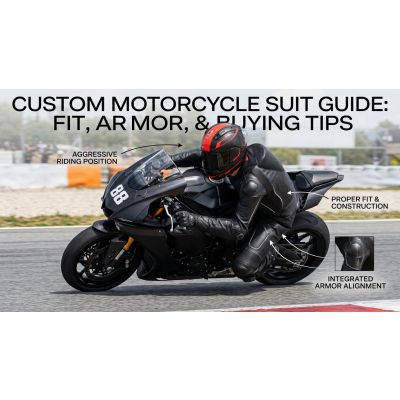
Track day motorcycle gear comes down to one question: does it fit the rider's body, riding style and safety needs? Many riders choose by brand or appearance first, then struggle with comfort, armour placement or sizing once the gear arrives. A suit cut for the riding position stays put, keeps armour over the joints and is easier to wear for a full session than gear that looks good but does not fit. This guide explains what to check before ordering, which features matter and which sizing mistakes to avoid.
Key Takeaways
- Fit in the riding position matters more than fit when standing, because armour has to stay over the shoulders, elbows, knees and back.
- One-piece suits suit track riding, while two-piece suits are more practical for mixed road and track use.
- Standard sizing works when measurements match the size chart; custom sizing helps when they fall between sizes or the body shape is non-standard.
- EN 17092 classes whole garments from AAA to C, and EN 1621 rates armour at Level 1 or Level 2, but neither rating promises protection.
Quick Buying Recommendation
Track-day riders and sportbike owners should prioritise a one-piece suit or a matched two-piece set with strong leather construction, correctly placed armour and a secure fit in the riding position. If body measurements match a standard size chart, standard sizing can work well. If they fall between sizes, custom sizing can improve fit and armour placement. Street riders and first-time buyers often find two-piece suits more practical. Beginners should check fit, armour and construction before choosing colours or logos.
Choose Gear Based on Your Riding Style
Different riding styles call for different features.
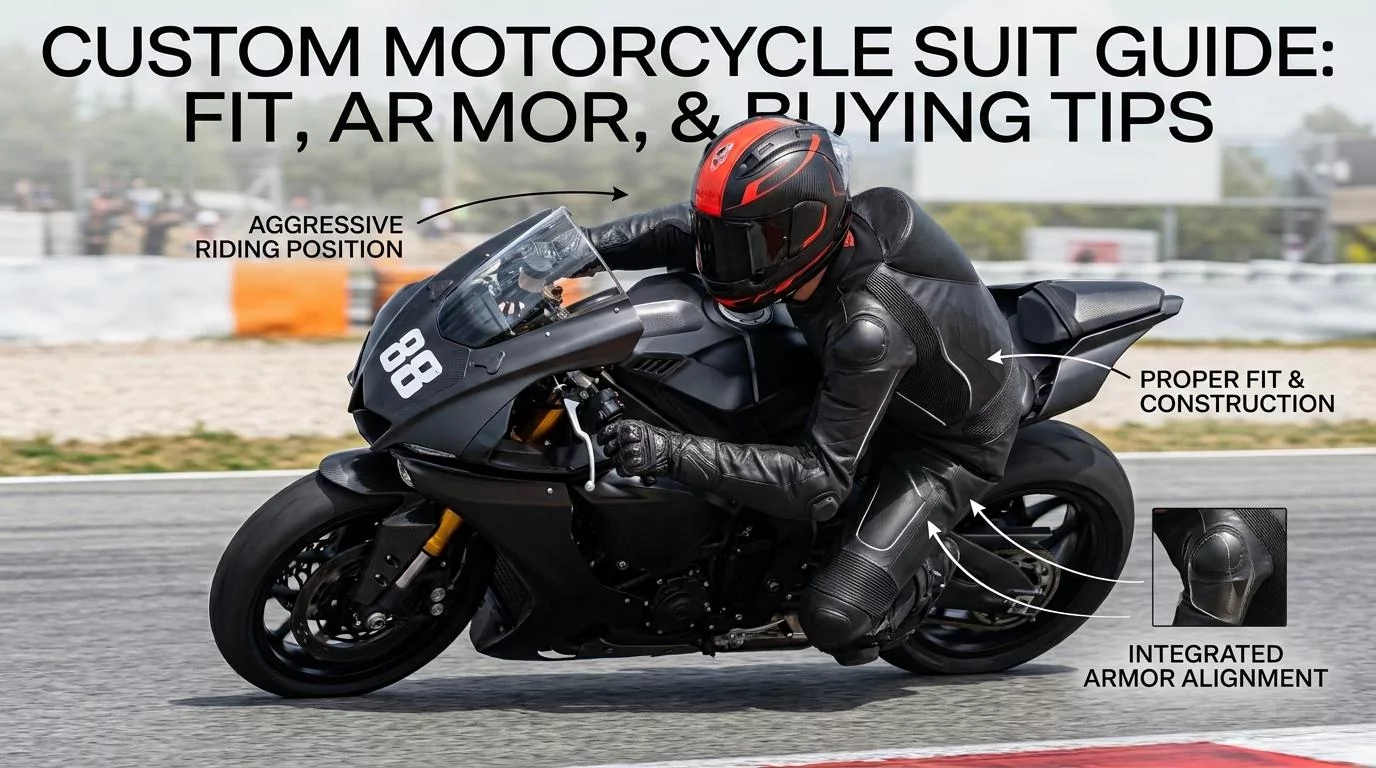
- Track days: a suit that stays secure in an aggressive position, with strong material, aligned armour and no loose fabric that can flap or shift in hard cornering.
- Sportbike road riding: a balance between track-style protection and comfort for street use.
- Street riding: ventilation and easy movement off the bike, which is why two-piece suits and jackets are often more practical than a full one-piece.
- Touring: ventilation and a comfortable seating position for long days.
Riders upgrading from older gear usually know their size and riding position, which makes custom sizing a reasonable option. No single suit type or sizing method suits every rider, so the choice should follow how the rider rides and how the body measures.
Fit, Sizing and Features to Check
Fit in the Riding Position
A suit that fits the riding position, not the standing position, keeps armour aligned with the shoulders, elbows, knees and back. On the bike, it should feel snug without restricting movement, with no bunching at the chest, shoulders or waist. If it is too loose, armour can shift. If it is too tight, comfort and mobility drop, and the gear tends to be worn less.
One-Piece or Two-Piece
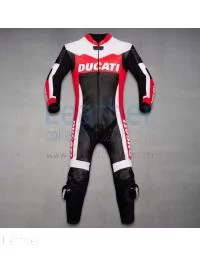
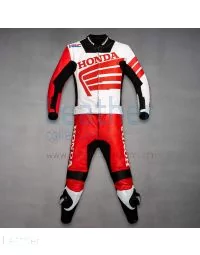
A one-piece suit keeps jacket and trousers as a single garment, which avoids a waist gap, and it is the usual track choice. A two-piece suit is more practical for the road because the jacket can come off indoors, but the connection matters, so a full-length zipper that joins jacket and trousers is worth looking for. Browse the for one-piece options or the for a connected two-piece set.
Standard or Custom Sizing
Standard sizing works well when body measurements match the size chart. Custom sizing can help when measurements fall between sizes, when the body shape is unusual or when armour needs to sit in a specific position. Accurate measurements are essential for a custom order, because a wrong measurement defeats the purpose.
Features to Check Before Ordering
- Material: cowhide is the common choice for suits such as the . Leather type and thickness should be listed in the product details.
- Armour: check whether armour is included, whether it is Level 1 or Level 2, and where it sits.
- Construction: reinforced stitching at stress points, smooth zippers and secure connection points.
- Comfort: stretch panels at the shoulders, elbows and hips, ventilation through perforation or mesh, and a soft lining.
- Compatibility: sleeves and legs should work with the rider's gloves and boots, and a two-piece suit needs a full connection zipper.
Riders ready to compare protective gear for track and road use can review
to find options built around fit and safety. For road use, the follow the same fit principles.Safety Standards: EN 17092 and EN 1621
Two European standards help explain what a suit is designed to do. EN 17092 covers whole garments. According to testing body MCG, it sets five classes: AAA (leather suits suitable for race tracks), AA (touring), A (light urban riding), B (abrasion protection only) and C (protector carriers with impact protection alone). The standard series falls under EU Regulation 2016/425 on personal protective equipment, and products must show the achieved class on their labels.
EN 1621 covers impact protectors. The Motorcycle armour overview on Wikipedia states that limb protectors under EN 1621-1 must keep the mean transmitted force below 35 kN at Level 1 (no single value over 50 kN) and below 20 kN at Level 2 , while back protectors under EN 1621-2 are tested to mean values below 18 kN at Level 1 and 9 kN at Level 2. A lower figure means less force passes through the armour in the test. These are laboratory ratings and do not promise that a rider will avoid injury, so armour placement and fit matter as much as the rating.
Comfort, Movement and Control
Comfort affects how often gear is worn and how well a rider can concentrate. Stretch panels, ventilation and lining make long sessions and warm weather easier. A suit that moves with the body in the riding position lets the rider focus on the bike instead of adjusting the gear. Value depends on fit, construction, armour and how well the suit matches the riding use, not on price alone.
Common Buying Mistakes
- Choosing by design only: fit, armour and construction come first.
- Ignoring riding-position fit: armour moves when the rider sits on the bike.
- Guessing the size: measure carefully against the size chart.
- Ignoring armour placement: check that it lines up with shoulders, elbows, knees and back when seated.
- Buying too loose or too tight: loose gear lets armour shift, and tight gear restricts movement.
- Overlooking gloves and boots: sleeves and legs should not leave gaps or bunch.
- Assuming every product has the same armour: options vary by product.
- Skipping ventilation needs: summer and track gear may need more airflow than winter or street gear.
Leather Collection makes motorcycle gear to order, with standard and custom sizing options, so jackets, suits, gloves and boots can be matched as a set.
Final Buying Steps
- Identify the main riding style: track days, sportbike road riding, commuting or touring.
- Choose the product type: one-piece for track focus, two-piece for mixed use, or separate jacket and trousers for flexibility.
- Measure carefully against the size chart, and compare with the riding-position fit notes.
- Decide between standard and custom sizing.
- Check the armour type, placement and construction.
- Review ventilation, lining and glove and boot compatibility.
For a made-to-order example, see
and check its listed armour and garment class on the product page.Frequently Asked Questions
Is custom motorcycle gear better than standard size gear?
Neither is better for every rider. Standard sizing works when measurements match the size chart. Custom sizing can improve fit and armour placement when measurements fall between sizes, when the body shape is non-standard or when armour should be positioned for a specific riding posture. Accurate measurements are essential for custom sizing to work.
Should I choose a one-piece or two-piece racing suit?
A one-piece suit keeps the jacket and trousers joined, which avoids a waist gap during aggressive track riding and helps keep armour aligned. A two-piece suit is more practical on the road because the jacket can be removed off the bike. Track-focused riders usually choose one-piece suits, while mixed-use riders often prefer two-piece suits with a full connection zipper.
How tight should motorcycle gear fit?
Gear should feel snug in the riding position without restricting movement. Seated on the bike, it should not bunch at the chest, shoulders or waist, and armour should sit over the joints. Too loose allows armour to shift in a crash, while too tight restricts movement and comfort. Fit should be tested in the riding posture, not standing.
What armour should I check before ordering?
Check whether armour is included, whether it is Level 1 or Level 2 under EN 1621, and where it sits. Level 2 has the stricter transmitted-force limit in the standard test, but neither level promises injury prevention. Armour should line up with the shoulders, elbows, knees and back when the rider is seated in position.
What if my measurements fall between two sizes?
Compare the measurements that affect armour placement most, such as shoulder width and torso length, and think about how the suit will be worn in the riding position. For a made-to-order suit, custom sizing removes the need to guess. Guessing between standard sizes often leads to poor armour alignment and a suit that is uncomfortable to ride in.
Written by the Leather Collection Editorial Team.