 USA
 Canada
 Brazil
 Germany
 France
 Italy
 Switzerland
 Sweden
 Spain
 Great Britain
 Norway
 Russia
 South Africa
 Japan
 Australia


Short answer: no. Leather is water-resistant, not waterproof. It sheds a light shower for a short time, then absorbs water, which can stain, stiffen and dry it out. A leather-safe protector and conditioner help it shrug off light rain, but they will not make a jacket watertight, and a leather jacket is not rain gear.
Key takeaways
- Leather is porous. Finished smooth leather resists water better than suede and nubuck, but all of it eventually soaks through.
- Treatments add surface resistance that wears off. They do not make leather waterproof.
- Test any spray, wax or cream on a hidden spot first, because many darken or change the leather.
- Dry a wet jacket slowly at room temperature, away from direct heat.
- For riding in real rain, use gear designed for it, such as a waterproof layer or a jacket with a removable rain liner.
What happens when leather gets wet
Leather is a fibrous, organic material, and tanning does not make it sealed. Water enters the fibers and swells them. As the leather dries, the fibers can shrink unevenly and lose some of the oils that kept them soft. The result can be water marks, a stiff or rough feel, a darker patch where water sat and, over repeated soakings, dry or cracked leather.
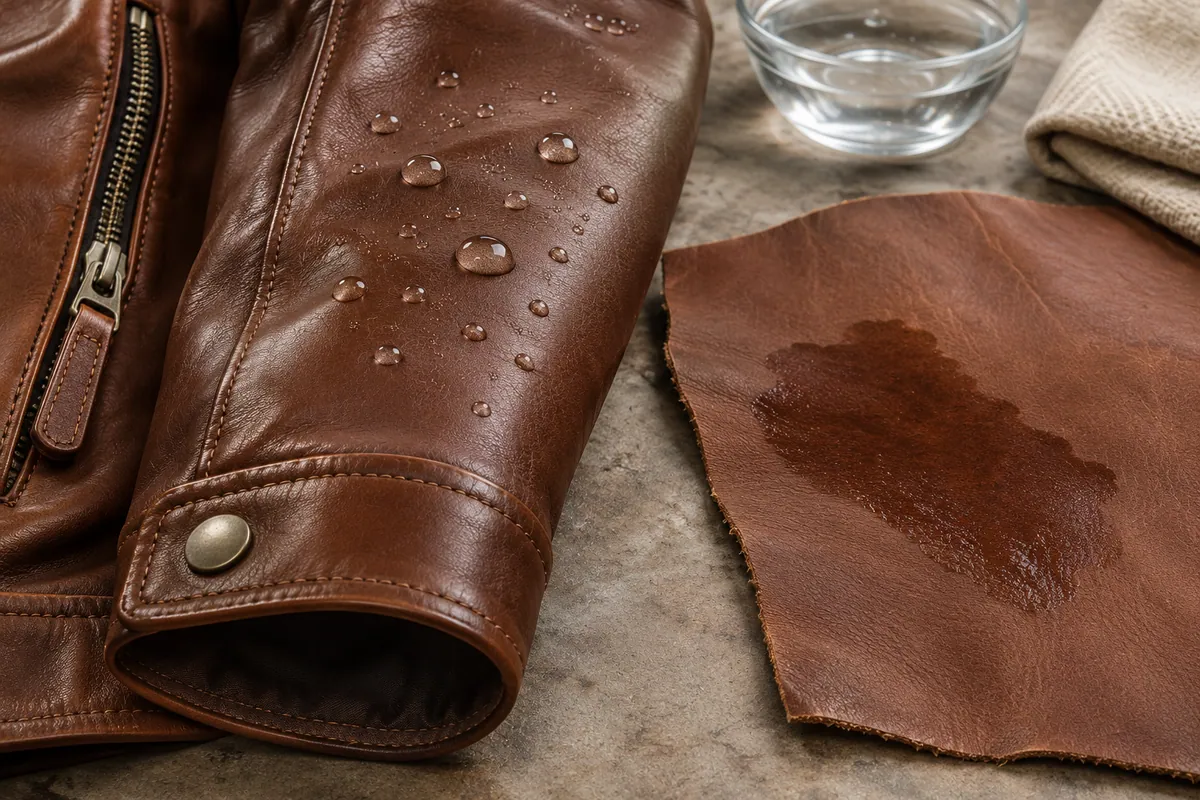
How badly it reacts depends on the finish.
| Finish | Reaction to rain |
|---|---|
| Smooth, finished (pigmented) leather | Water beads for a while; the coating protects, but seams, edges and scuffs let water in |
| Aniline or lightly finished | Absorbs water and marks readily |
| Suede and nubuck | Most vulnerable; water flattens the nap and leaves rings |
| Waxed or oiled leather | Better at shedding water, though it can still soak through if saturated |
Treatments compared: sprays, wax and cream, oils
| Treatment | What it does | Suits | Risk |
|---|---|---|---|
| Water-repellent spray | Leaves a thin surface layer that makes water bead | Smooth leather, and suede or nubuck only if the product says so | Can darken or dull the finish; wears off |
| Wax or cream with wax | Adds a water-shedding film and some conditioning | Smooth leather and boots | Can darken leather and leave a tacky surface |
| Oils (mink, neatsfoot) | Penetrate and soften, with some water resistance | Boots and thick leather | Darken leather, can soften and loosen it; poor choice for light colors |
| Conditioner alone | Keeps leather supple, which helps it cope with wetting | Most smooth leather | Little water resistance by itself |
Our comparison of mink oil, neatsfoot oil and conditioner goes deeper on the oils. Whatever you choose, use a product intended for your leather's finish and follow its instructions. No performance claim here is guaranteed.
How to apply a protector
- Clean the jacket. Dirt under a protector traps moisture. Our guide to cleaning and conditioning a leather jacket covers it.
- Test a hidden spot. Apply a little inside a hem, let it dry fully and check for color change.
- Apply thin, even coats. Hold sprays at the distance on the label. Work in a ventilated space.
- Let it cure. Allow the full drying time before wearing or stacking the jacket.
- Reapply when it stops beading. Water that soaks in instead of beading is the sign.
What not to use
- Silicone sprays on suede. They can flatten the nap and stain.
- Heavy oils on pale leather. They darken it permanently.
- Hair dryers or heaters to speed up drying after treatment. Heat distorts and dries leather.
- Household waterproofing products not made for leather.
If your jacket is already soaked
- Blot standing water with a soft, dry cloth. Do not rub.
- Hang the jacket on a wide, padded hanger in a ventilated room at room temperature.
- Keep it away from radiators, direct sun and hair dryers.
- Once dry, brush suede or nubuck, and check the care label about conditioning smooth leather.
Our full guide to drying a wet leather jacket has the details, and rain and leather: what to do when your leather clothing gets wet covers other leather clothing. For a napped finish, see suede vs smooth leather care.
A patch-test routine before you treat the whole jacket
A protector that looks fine on the tin can still change the color of your jacket. A five-minute test avoids most mistakes.
- Pick a hidden spot that matches the main leather, such as the inside of a hem or under the collar.
- Apply a small amount of the product exactly as the label says.
- Wait until it is fully dry, ideally a day.
- Compare it with an untreated patch beside it for color, texture and sheen.
- Drip a few drops of water on it. Beading on the treated patch and soaking on the untreated one shows it is working.
If the test patch darkens more than you like, stop. Leather treatments are very hard to remove once they have soaked in.
Choosing a jacket for wet weather
If you know you will be out in rain, the best protection starts with what you buy, not what you spray later.
- Finish. A finished, pigmented smooth leather sheds water better than aniline or suede.
- Thickness. Thicker hide takes longer to soak through.
- Seams and zippers. Rain gets in at seams, collars and cuffs. Storm flaps and covered zippers help.
- Lining. A removable lining or rain liner lets you add or take away layers.
- Color. Dark leather hides water marks better than light leather.
Riding and long wear in rain
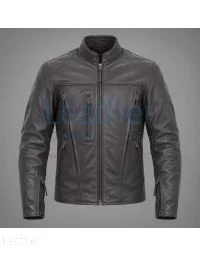
A leather jacket is not a raincoat. In a downpour the leather soaks, gets heavy and loses warmth, and a protector will not change that. Riders who commute in wet weather usually add a waterproof layer over the jacket or choose a riding jacket with a removable rain liner. Race-style leather jackets are cut for the track, not for wet commuting. If you ride in the rain, a jacket built for it is the better choice. Our custom motorcycle jackets have no waterproof or rain liner, so wear a rain layer over them.
No treatment changes the fact that wet leather is slippery and cold. Following safety guidance for riding in the wet is separate from caring for the leather, and the manufacturer's instructions for any gear come first.
Care after rain, by finish
| Finish | After it dries | Avoid |
|---|---|---|
| Smooth, finished | Wipe off salt and mud with a barely damp cloth; condition lightly if the leather feels dry | Heavy oil and direct heat |
| Suede and nubuck | Brush the nap in both directions; reapply a suede-safe protector if needed | Rubbing while wet; smooth-leather creams |
| Waxed or oiled | Let it dry, then rework the wax if water stops beading | Hot water or solvent cleaners |
Road salt deserves a mention. In winter it dries into white marks and draws moisture from leather, so wipe it off promptly with a damp cloth and let the jacket dry naturally.
Four mistakes that make rain damage worse
- Drying it near a heater. It is the fastest way to a shrunken, stiff jacket.
- Stuffing it wet in a bag. Trapped moisture breeds mildew and smell.
- Over-treating. Layering spray after spray builds a patchy film.
- Ignoring the lining. A wet lining dries slowly. Open the jacket out so air reaches the inside.
FAQs
Is leather waterproof?
No. Leather is water-resistant for a short time, but it absorbs water and can be damaged by soaking.
Can you waterproof a leather jacket?
You can make it more water-resistant with a leather-safe protector, but you cannot make it fully waterproof without changing the leather. Reapply as the effect wears off.
Does waterproofing spray ruin leather?
It can darken or change the look of some leathers, and the wrong spray can damage suede. Test on a hidden spot and choose a product for your finish.
How often should you reapply protector?
When water stops beading on the surface. How often depends on wear, weather and the product.
Can you wear a leather jacket in the rain?
For a short time in light rain, yes, especially in finished smooth leather. For heavy or long exposure, use a waterproof layer.
Is waxed leather waterproof?
No, though wax helps it shed water better. Saturated waxed leather can still soak through.
If you ride in wet climates, plan to wear a rain layer over our custom motorcycle jackets, or compare styles in our custom leather jackets.